Katheryne Davis
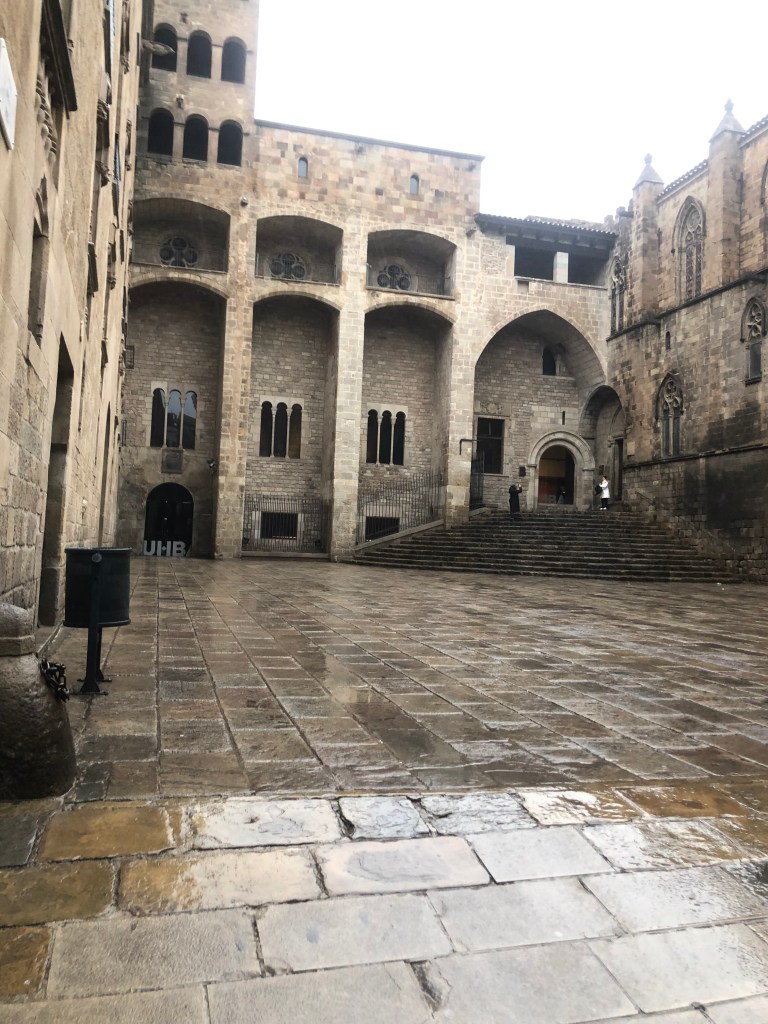
Trip to Museu d’História de la Cuitat
February 3, 2020
In my visit to the museum, I was in awe of how well preserved and innovative the Roman ruins were. The remains were filled with interesting artifacts that gave insight into the life of Barcino, the roman city. The engineering consisted of different types of columns and pillars, that have survived for thousands of years. Today, buildings are made to be visually appealing, but for the Romans, cities were built to live in and serve a purpose.
Roman influence is everywhere in Spain – especially in the architecture. On my walk home, I stopped to look around at the Roman architectural influence, which you can see in the buildings in Barcelona and columns.
Walking around the museum, we saw several artifacts that encompassed the highly skilled and artistic abilities of the Romans. While the objects that we saw may be considered weird for us, they were incredibly technologically advanced, and made to last, not look good. Some of the artifacts that I enjoyed the most were the curtains, held down by stone, and the gameboard, carved into stone. The game board surprised me because I never thought about entertainment that long ago, probably because my idea of entertainment is on a screen. It is interesting to see that despite life being much more dangerous and resourceful, Romans still prioritized entertainment.
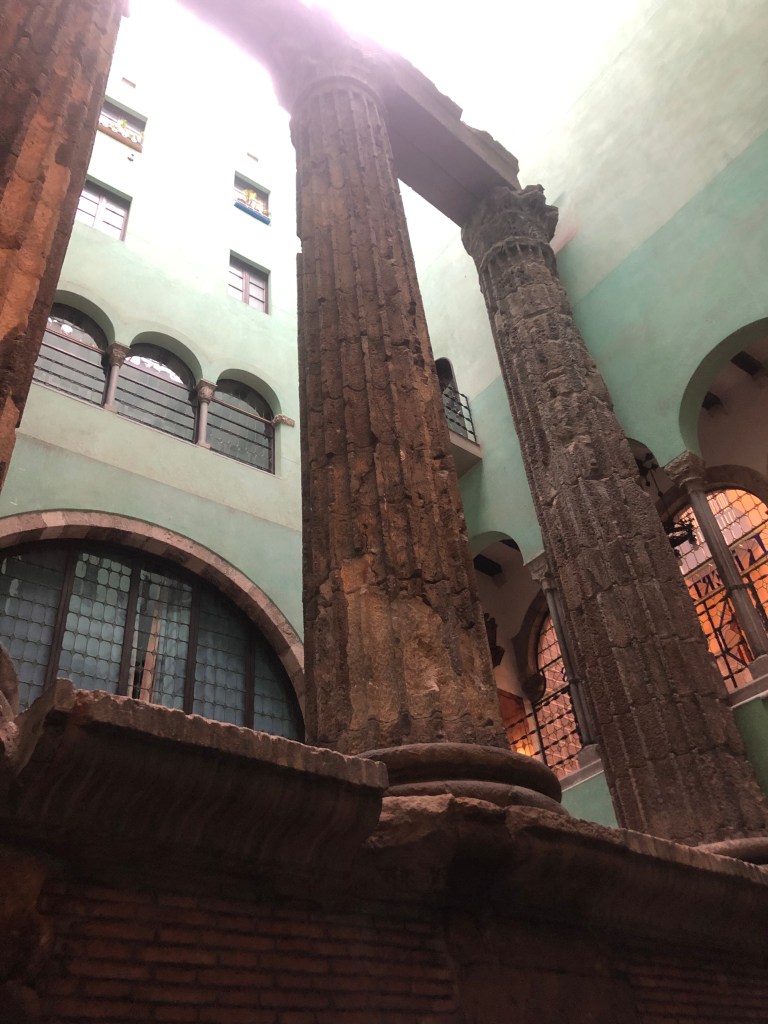
Roman influence – Columns at the beginning of the trip
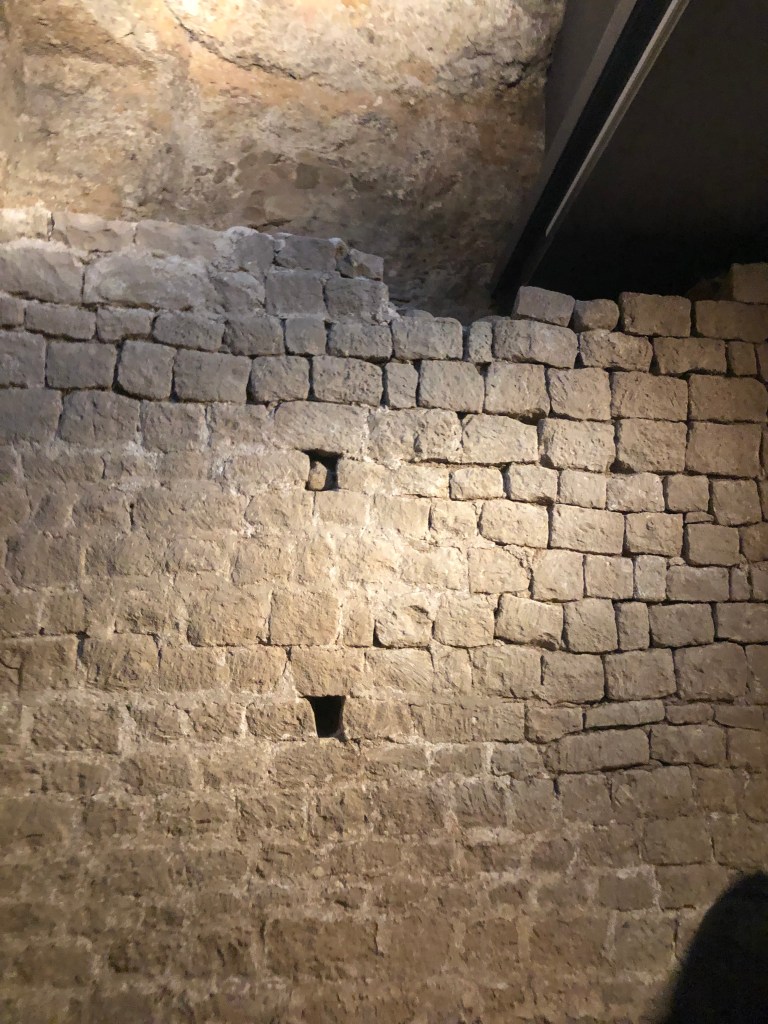
Roman influence – Walls of the Roman city
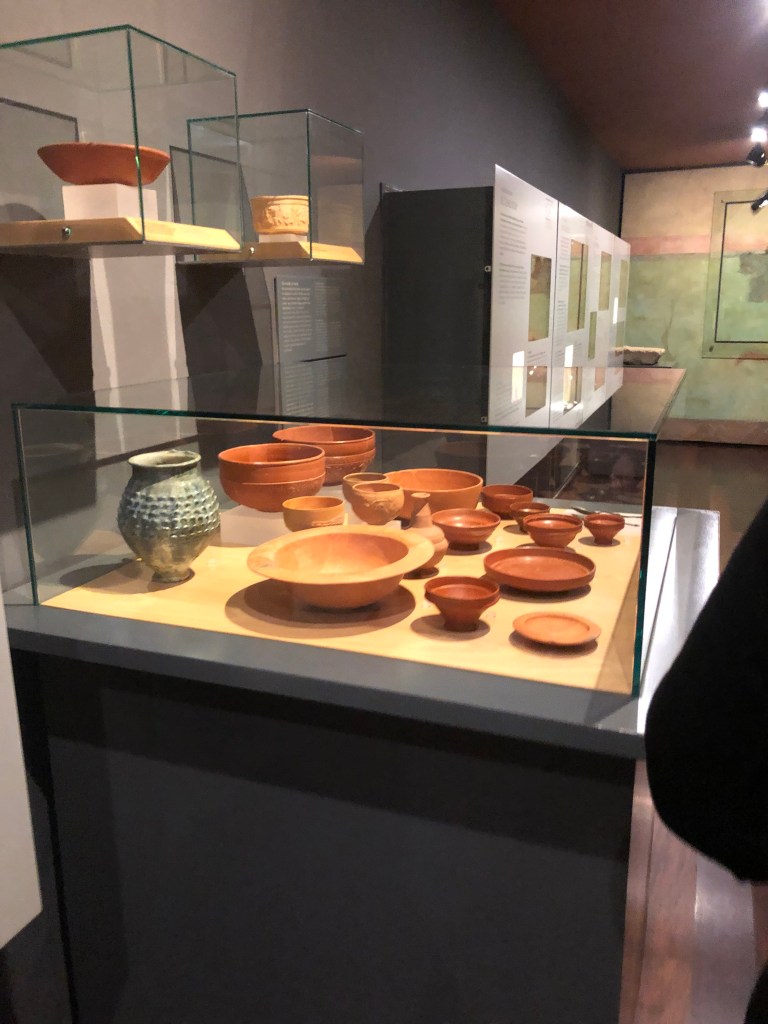
Artifacts – Ancient pottery
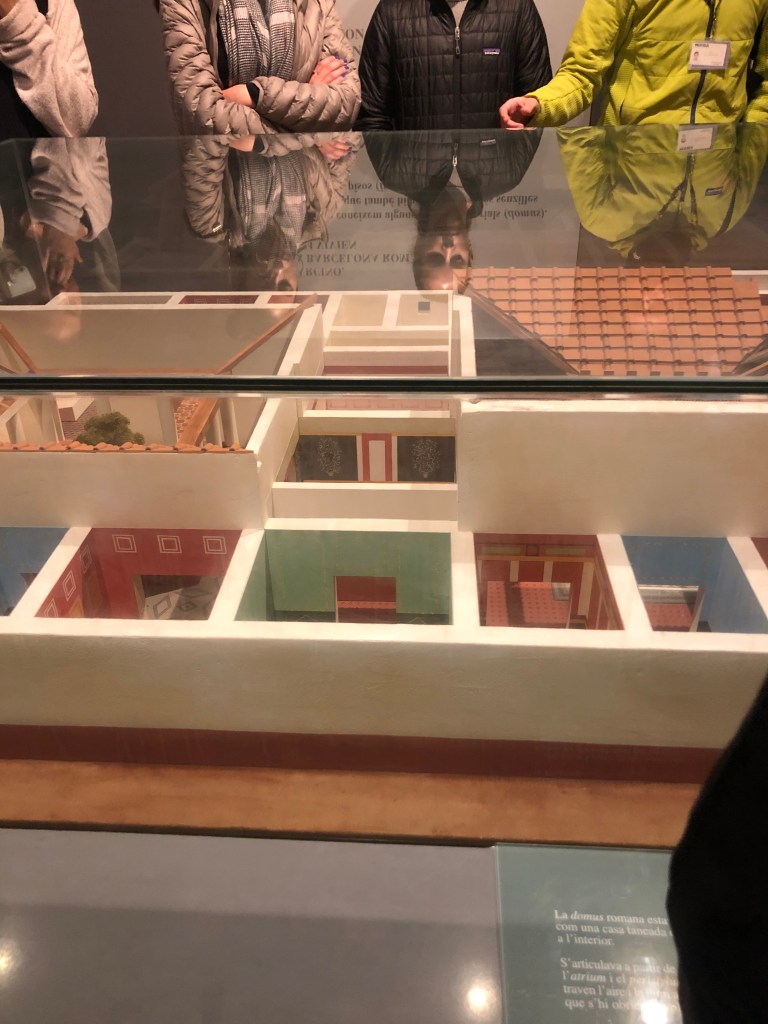
Roman influence – Model of a domus, a traditional Roman house
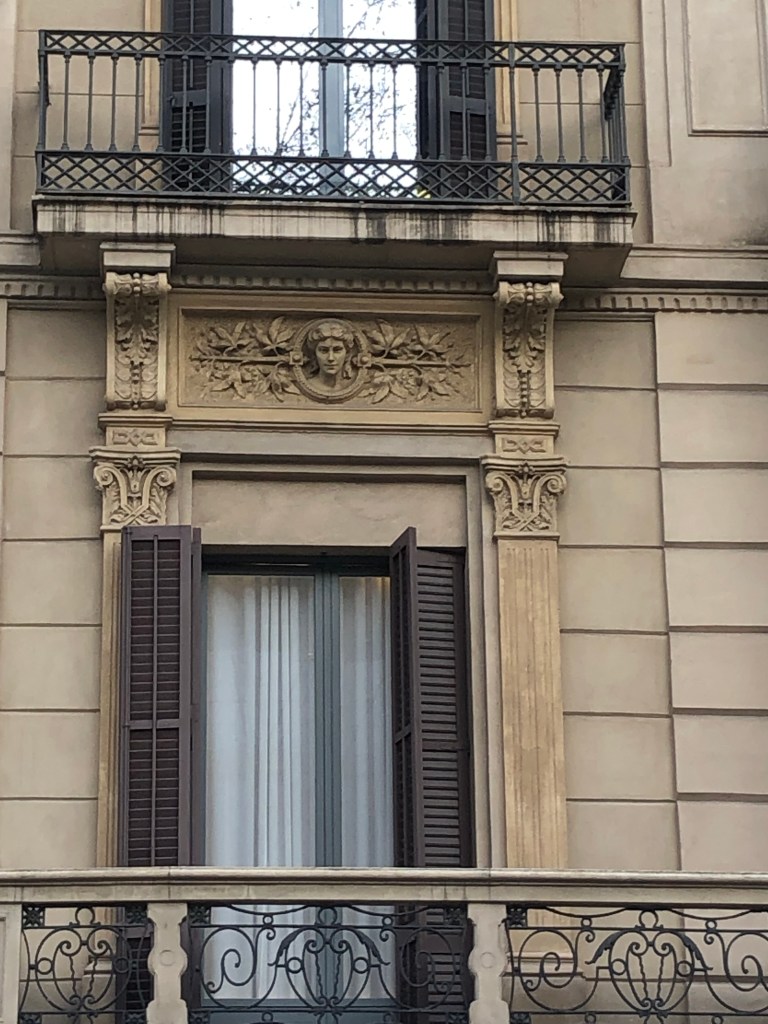
Construction similarities – Corinthian columns in Catalunya
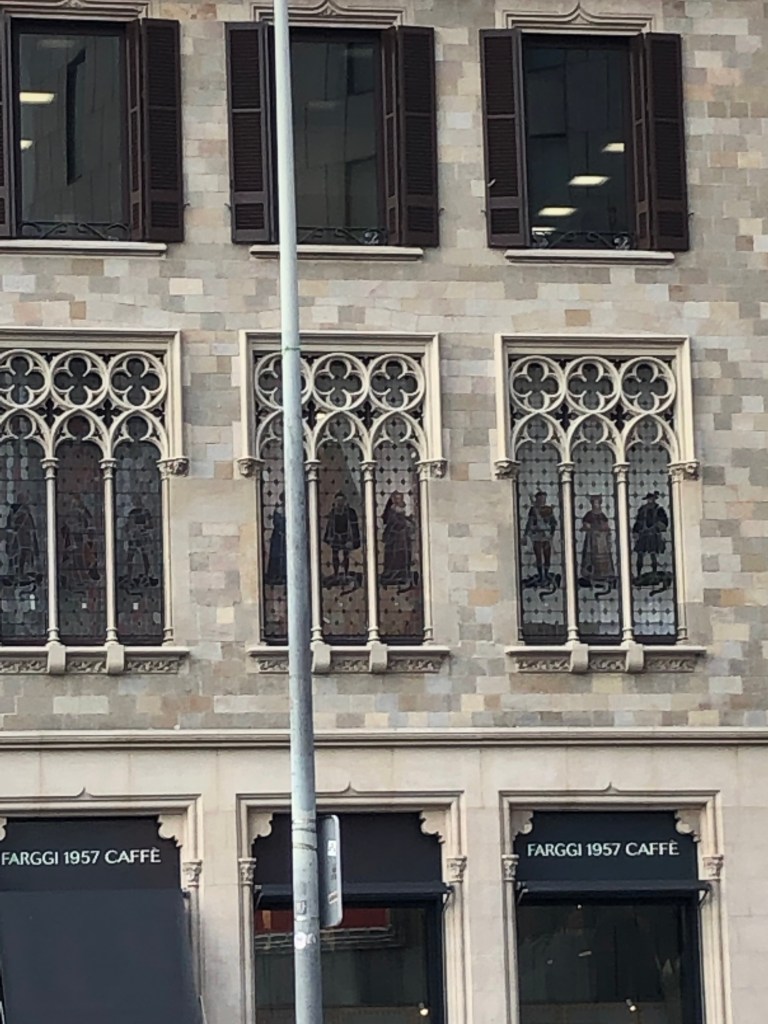
Construction similarities – Glass stained windows in Catalunya
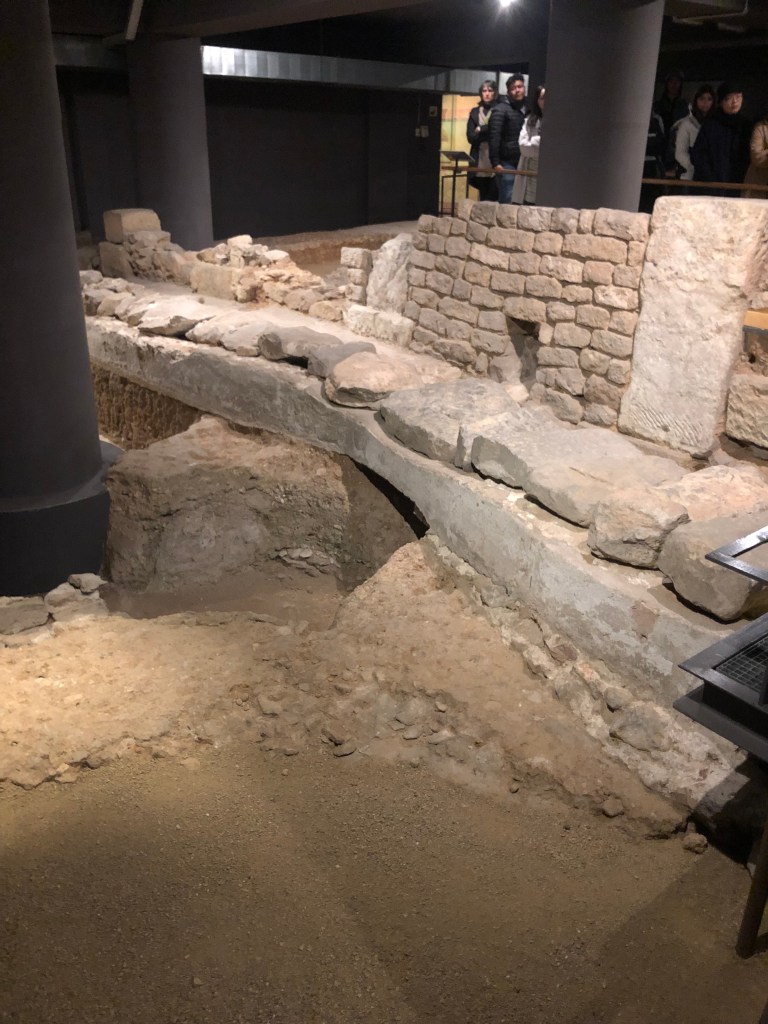
Roman influence – Remains fo the sewage system in Barcino 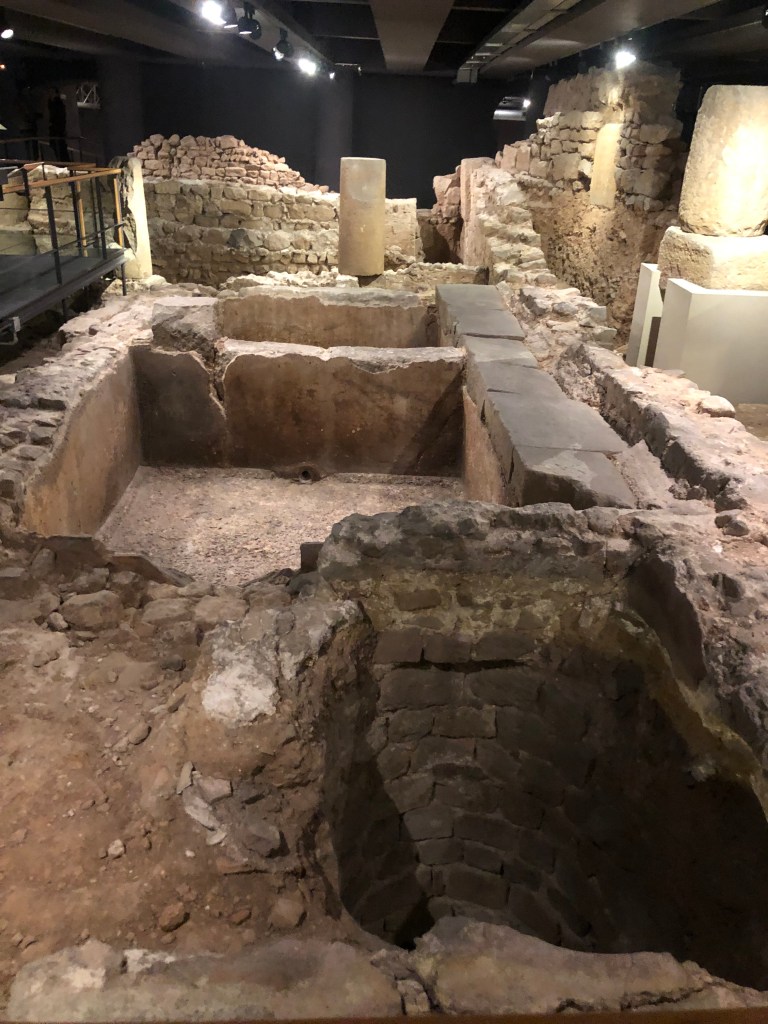
Roman influence – Remains of a domus
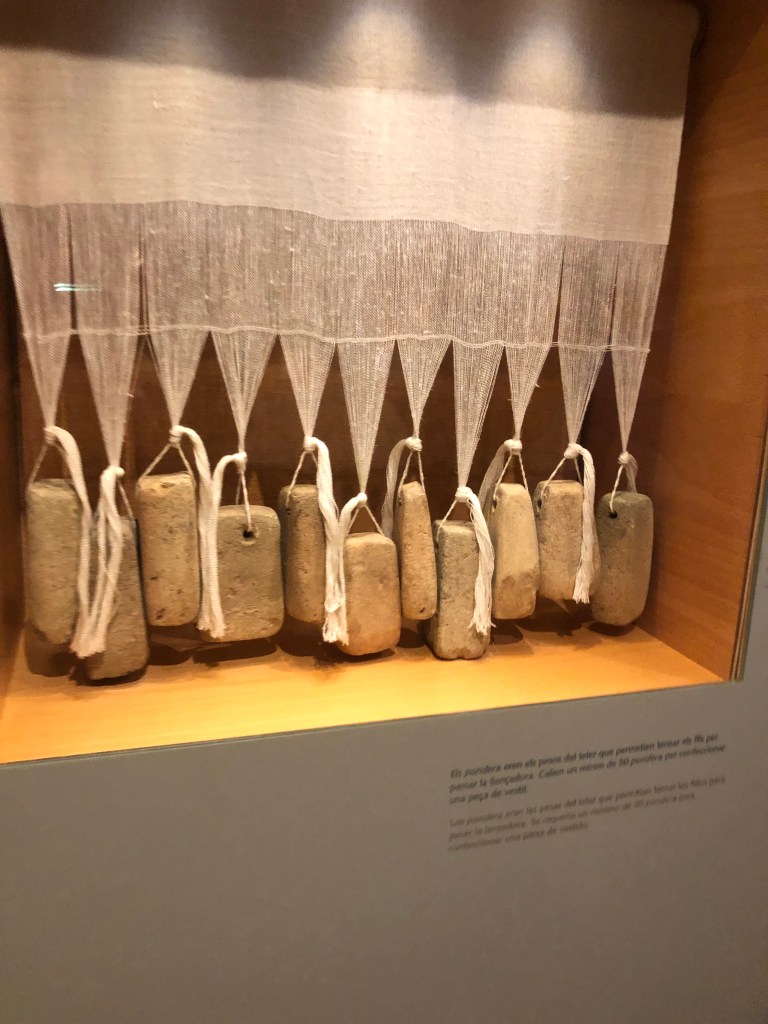
Artifacts – Roman curtains held down by stone
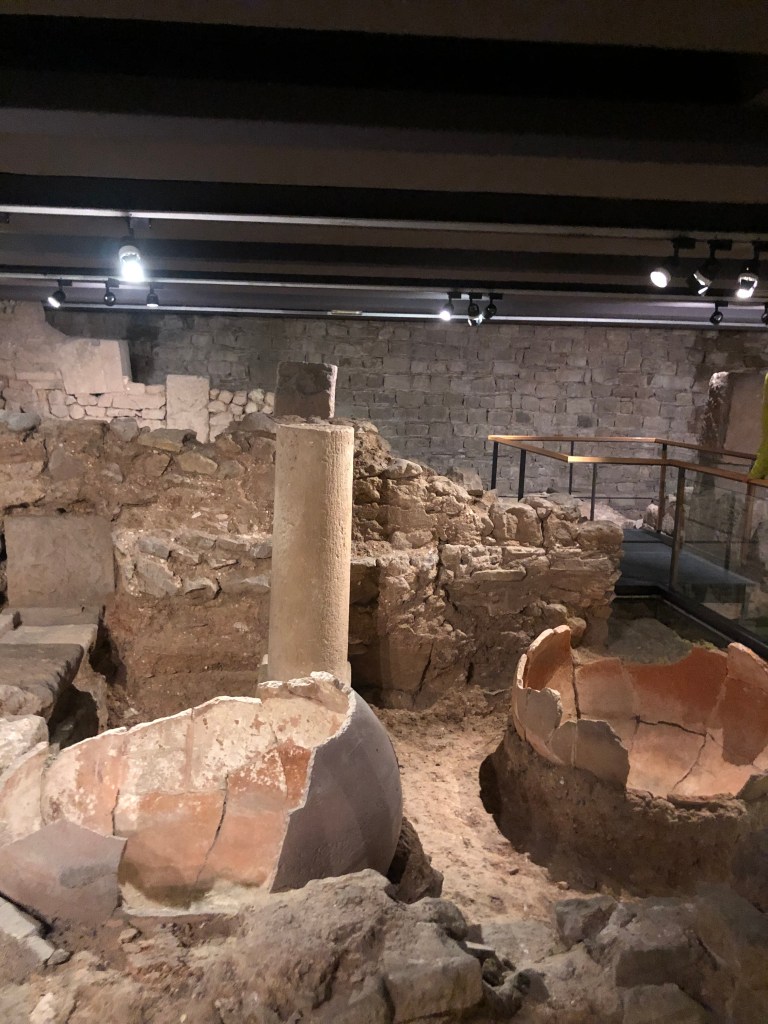
Artifacts – Large clay bowls where wine was mixed and aged
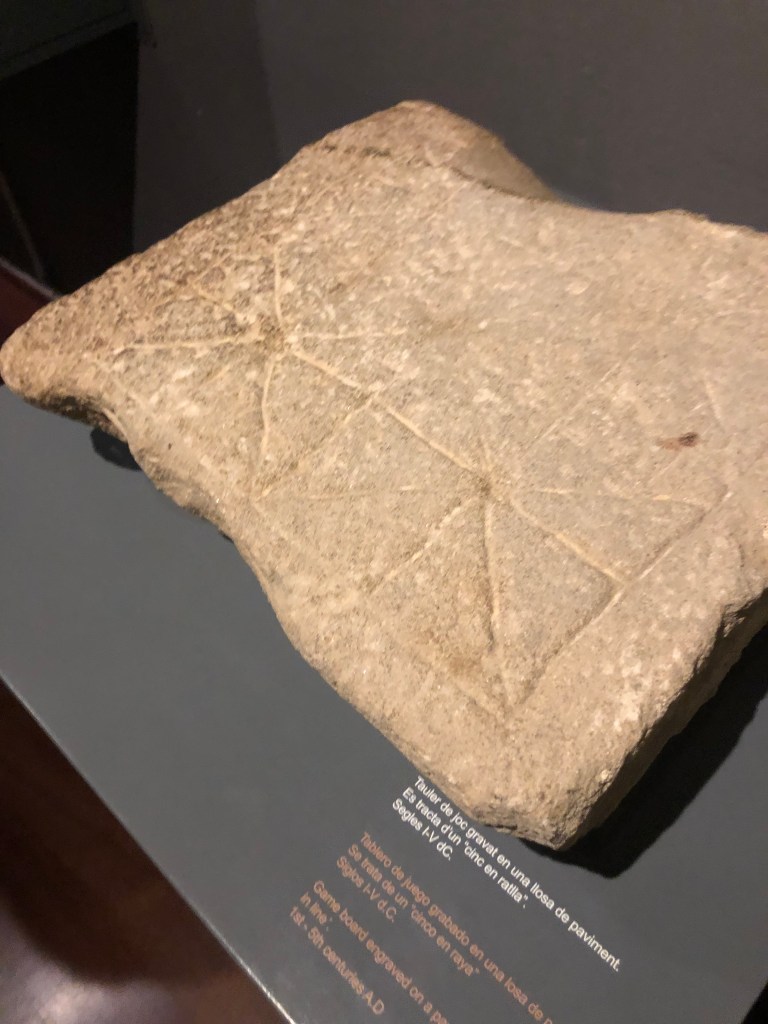
Artifacts – Game board used in the 1st – 5th centuries
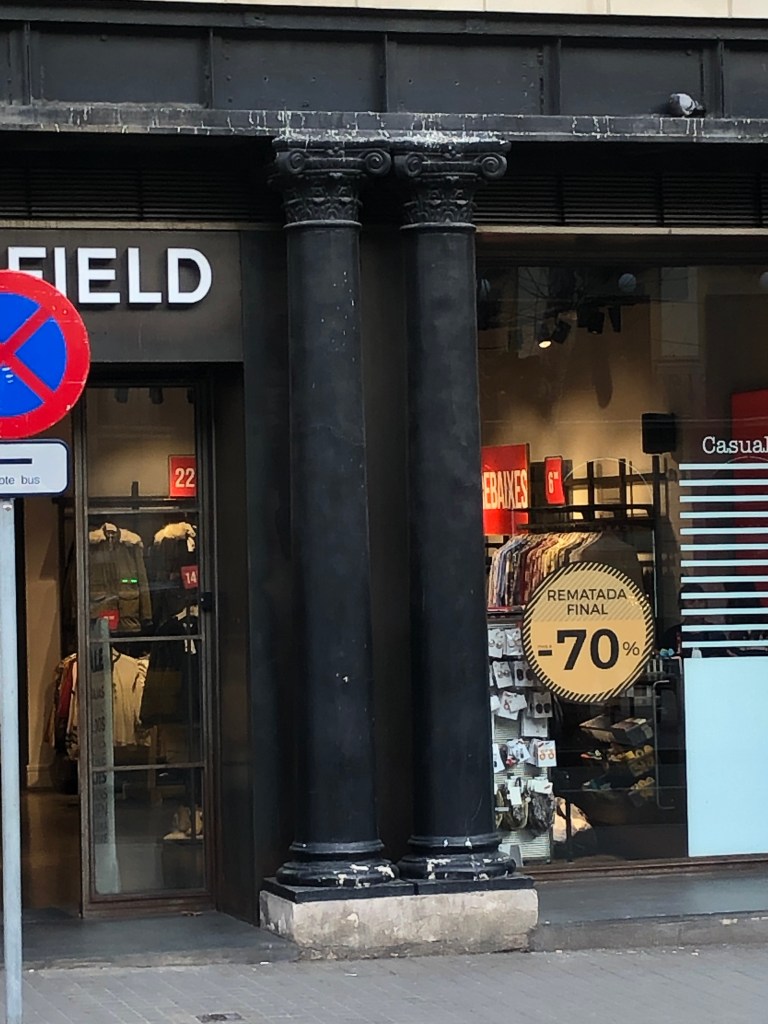
Construction similarities – Doric columns by IES
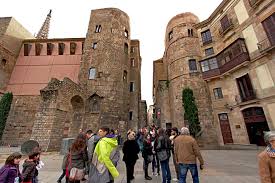
Construction similarities – Gothic quarters
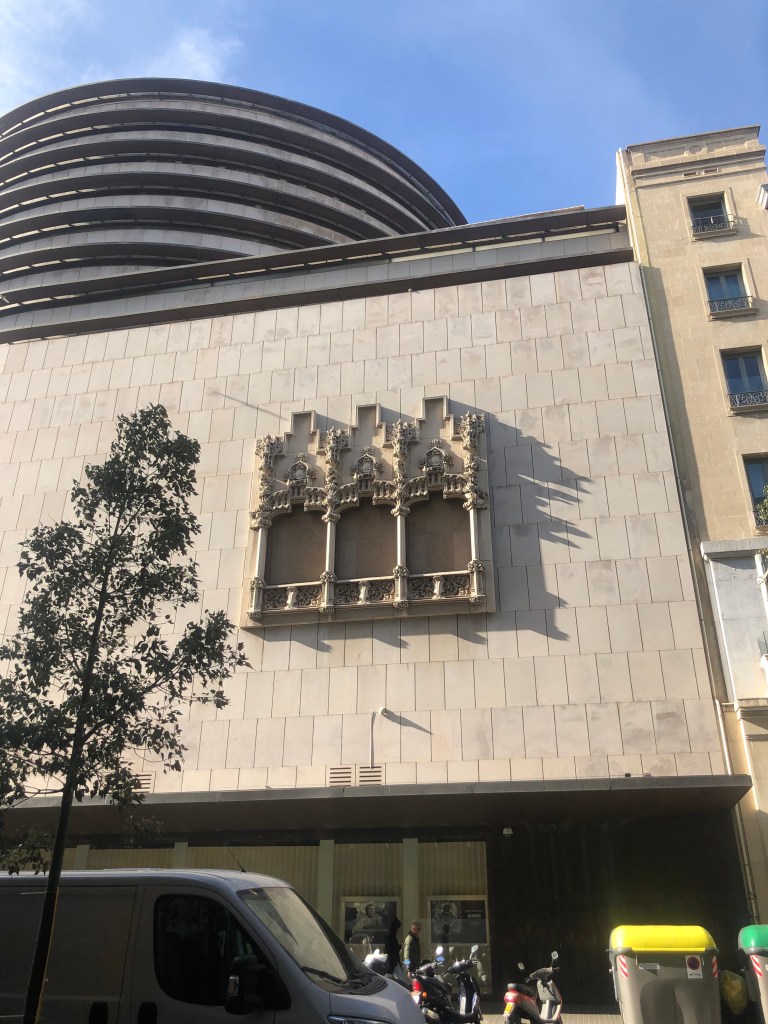
Construction similarities – Gothic windows by Corte Igles
In the museum, we saw a model of a domus, a traditional Roman house. In the domus, there is a culina. A culina in a Roman house was the kitchen in a Roman house. It was usually dark and very small, as preparing meals was the job of slaves. It is much darker than a typical American/modern-day kitchen, but still serves the same purpose – to make food. One of the most important parts of the domus is the Peristylum. The Peristylum is the courtyard in a Roman house. It is an open courtyard with columns surrounding. Because Roman houses were private and did not have windows, the Peristylum is the light source of the house. Most American homes would not have a modern-day version of the Peristylum, as most homes today have windows in every room. Next, there is an atrium. An atrium is a courtyard with enclosed rooms on all sides. It has no roof and a shallow pool in the middle to catch rain water. Modern houses have atriums, which are typically an entry room with rooms on all sides. However, the biggest difference between the domus and homes we see today is that homes today typically are open, as oppose to having several enclosed rooms and a singular courtyard or atrium. The domus also has a triclinium, a formal dining room in a Roman house, with three couches along the sides of a dining room table. A tablinum is the room between the atrium and peristylum. It opened up to the garden and could typically be closed off, and a cubicula is a private room in a domus, typically a bedroom.
The wine culture in ancient Rome varied greatly from what we see in Barcelona today. There were two Gods of wine-making, Dionysus and Bacchus. The wine was aged in large, egg shaped bowls for about 27 days, the minimum amount of time it takes for alcohol to appear. The wine was young, light, and very different from the wine we see today, which is typically aged for at least a year.
All around Barcelona, the Catalan culture is especially present in wine. Catalonia has winemaking traditions that date back to even before Roman times, and is the birthplace of cava, a sparkling wine. Catalan wines typically feature a higher alcohol content than wine from other regions in Spain. Two popular brands on Catalonian wine are Celler Piñol and Torres Mas la Plana.
Drinking wine, even today, is seen as a religious act. Red wine is considered to be the blood of Jesus Christ, who died for our sins. Thus drinking his blood is a way to become closer with God. This is an example of the change from polytheistic beliefs in Roman times to monotheistic beliefs of Christians and Catholics today. The Romans once believed in multiple Gods, but progressed into Catholicism, where there is one God with three different bodies – the father, the son, and the holy spirit.
The baptist pool was in the ground, as oppose to the smaller, raised baptist pools that we see today. An adult would entirely submerge themselves in the pool, which I find very interesting.
 Catalan Chic